


 |
| Nandi and Bhringi playing Chaukabara. Artist Jagadish M. Kamble |
An exclusive showroom, one and only in India and first of its kind will be inaugurated on the same day. It will feature boardgames in a variety of craft forms like wood, cloth, metal and woven fabrics. It will also have a section of children toys educational objects which are crafted in wood.
The second edition of the popular publication 'Indian Traditional Boardgames A Guide to the Art of Play' co-authored by the team of researchers at Ramsons Kala Pratishtana will be released.
As is the norm, a new boardgame will be added to the repertoire of existing games and a new boardgame in a new craft form will also be introduced at this expo. Mark the dates and visit the exhibition for a unique journey into the varied craft traditions of India.
The expo will be open from 4th April to 31st May 2026. 10 am to 7 pm.
An exclusive gaming parlour to play and learn the varied games numbering about 27 will be open between 4 pm to 7 pm with experienced gamers as instructors.
Entry is free and open for public.
Come, join us for an unbelievable visual and hands-on experience of a lifetime.
Colourful bits of cloth have been stitched to create vibrant artefacts like lamp shades, wall hangings, torans, etc., in the applique craft at Pipili, Odisha. RKP team visited Pipili and Puri in November 2022 and were mesmerised by this colourful craft which has several layers of In many house-holds of Uttarakhand, womenfolk weave traditional woollen mini carpets. This beautiful craft form is from the Himalayas. Chaukabara game boards have been created in this craft. Daadu - played only by the Dawoodi Bohra community of Gujarat - has recently been documented. Crafted in Lambani embroidery along with Channapatna counters, this new game board is being introduced in this edition of the exhibition.


 |
| Chief guests being welcomed by traditional nadaswara |
 |
| Chairman of Ramsons Kala Pratishtana, R. Ajay Kumar Singh garlands Rajabahadur Khem Sawant Bhonsle VI of Sawantwadi royal family. |
 |
| Ms. Preeti welcomes RanisahebShubhadadevi Khem Sawant Bhonsle of Sawantwadi royal family with a beautiful bouquet of orchids. |
 |
| Smt. R. Harintiha Singh garlands Ranisaheb . |
 |
| Sri Rangoli Srikanth garlands artist Ganjifa Raghupati Bhat |

 |
| Puppets of Mysuru Puppet Theatre welcome the dignitaries with a brief performance |


 |
| Art Historian and designer Raghu Dharmendra explaining the display at the exhibition |


 |
| Rajabahadur Khem Sawant Bhonsle VI and Ranesaheb Shubhadadevi Khem Sawant of Royal family of Sawantwadi inaugurated the 10th edition of Kreedaa Kaushalya by lighting the lamp. |

 |
| Heralding novelty at Kreedaa Kaushalya |

 |
| Rajabahadur Khem Sawant Bhonsle VI released the 5-house Chaukabara game board in the woolen mini pile carpet craft of Sarmoli, Uttarakahnd, Ranisaheb Shubhadadevi Khem Sawant released the 7-house Chaukabara in the applique craft of Pipili, Odisha and Ganjifa Raghupati Bhat released the newly introduced gameboard of Daadu in the Lambani embroidery craft. |
 |
| Advisor of RKP, Raghu Dharmendra shows the gameboard of Aligulimane (Mancala) which he designed in the lost wax process of bonze casting. |

 |
| On behalf of RKP, Smt. Prema Simha garlands Ranisaheb |

 |
| On behalf of RKP, Smt. Bharati Madhukar presents a saree with a pallu design containing the Pagaday board game design, to Ranisaheb |
 |
| Advisor of RKP, Sri L.P. Madhukar presents a shawl to Rajasaheb. |
 |
| Trustee of RKP, Sri Rahul Singh garlands Rajasaheb. |
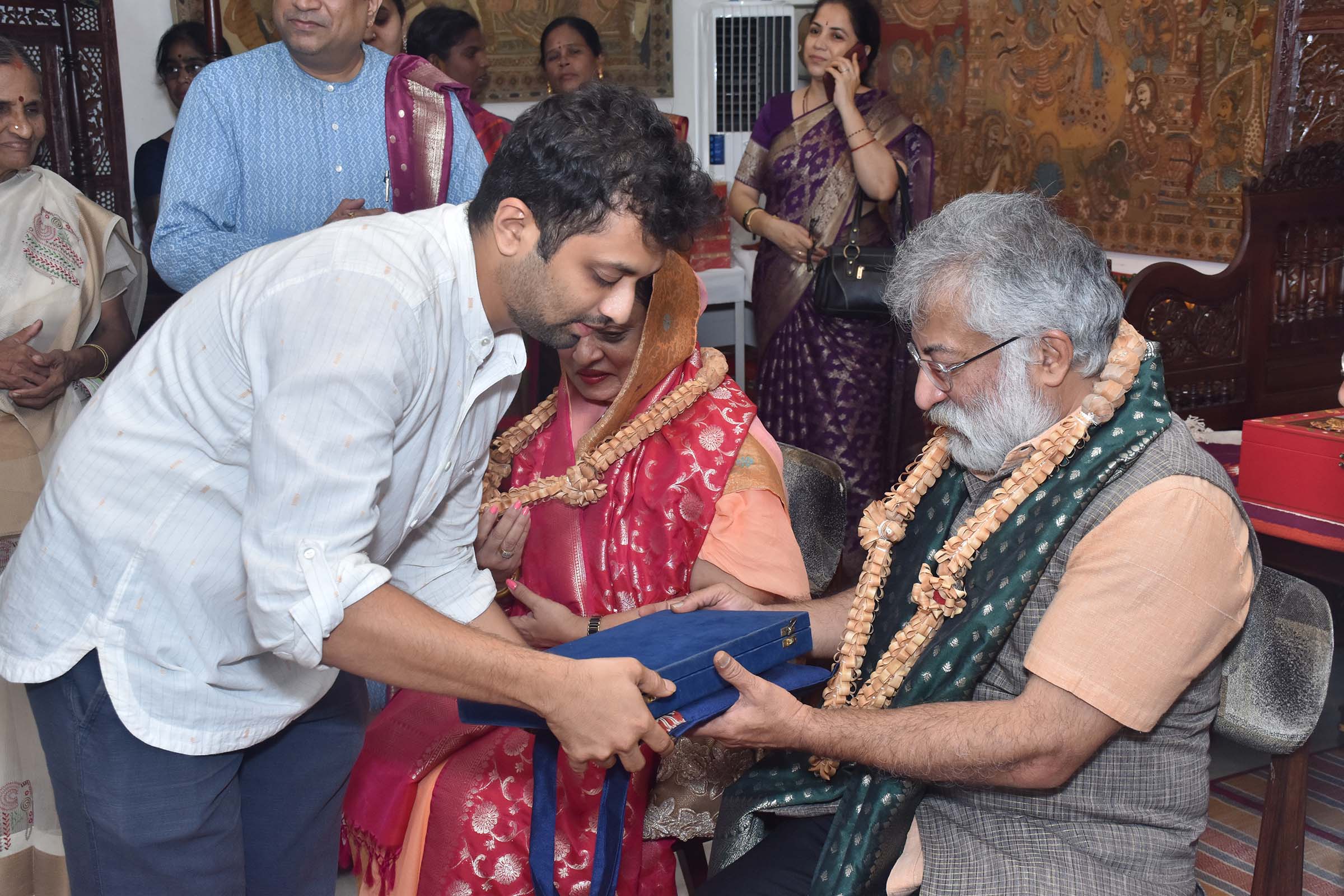 |
| Advisor of RKP, Sri Sachin presents a memento to Rajasaheb. |
 |
| On behalf of RKP, Sri Santosh presents a shawl to Sri Bhat. |
 |
| On behalf of RKP, Sri K.S. Shreehari garlands Sri Bhat. |
 |
| On behalf of RKP, Sri Santosh presents a memento to Sri Bhat. |

 |
| An impromptu game of Pagaday |


£ÀªÀÄävÀ£ÀzÀ,
¨sÁævÀÈvÀézÀ MqÀ£Ál vÀgÀ§®èzÀÄ Dl. ¨Á®åzÀ ªÉÄ®ÄPÀÄ ºÁPÀĪÁUÀ¯É®è, DrzÀ DlUÀ¼ÀÄ,
eÉÆvÉAiÀÄ°è DrzÀªÀgÀ ªÀÄÄRUÀ¼ÀÄ ªÀÄ£ÀªÀÄÄPÀÄgÀzÀ°è «ÄAa «Ä£ÀÄUÀĪÀÅzÀÄ ¸ÀºÀd.
ªÀÄ£À¸ÀÄì-ªÀÄ£À¸ÀÄìUÀ¼À£ÀÄß PÀÆr¹ ¨sÀzÀæUÀAlÄ ºÁQ ¨É¸ÉAiÀħ®è §æºÀä±ÀQÛ
DlUÀ½UÀÄAlÄ. £ÀªÀÄäµÀÖgÀ¯Éèà KPÉ, ¥Áæt ¥ÀQëUÀ¼ÀÆ PÀÆqÀ DºÁgÀ-gÀPÀëuÉUÀ½UÀµÉÖÃ
C®èzÉ ¥ÀgÀ¸ÀàgÀ ZÉõÉÖAiÀiÁqÀÄvÁÛ ¨ÉgÉAiÀÄĪÀÅzÀ£ÀÄß PÁt§ºÀÄzÀÄ. DlUÀ¼À F
ªÀiÁAiÀiÁªÉÆÃrAiÀÄ£ÀÄß D£ÀA¢¸ÀzÉ EgÀĪÀªÀgÀÄ AiÀiÁgÀÆ E®è.
ºÁ¸ÀÄ DlUÀ¼À D¥ÁåAiÀÄvÉ, «±ÉõÀvÉUÀ½AzÀ ¥Àæ¨sÁ«vÀªÁzÀ gÁªÀiï¸À£ïì PÀ¼ÉzÀ 25 ªÀµÀðUÀ½AzÀ ºÁ¸ÀÄ Dl-DnPÉUÀ¼À ¸ÀAUÀæºÀ, ¥Àj±ÉÆÃzsÀ£À, ¥ÀÄ£À±ÉÑÃvÀ£À, ¥ÀÄ£À¤ðªÀiÁðt, fÃuÉÆÃðzÁÞgÀUÀ½UÉ PÀn§zÀÞªÁV ¤AwzÉ. PÀgÀPÀıÀ®PÀ¯ÉUÀ¼À zÉúÀzÀ°è ºÁ¸ÀÄDlUÀ¼À ZɮĪÀÅ ªÀÄÆr¹ `QæÃqÁ P˱À®å' ¨É¼É¢zÉ. Dl DqÀĪÀ VüÀ£ÀÄß ¥ÀæZÁgÀ ªÀiÁqÀ¯ÉAzÉà gÁªÀiï¸À£ïì ªÀiÁrzÀ D±Á ¥ÀæAiÉÆÃUÀ«zÀÄ.
ªÉÄʸÀÆgÀÄ ¥ÀæzÉñÀzÀ ¥ÀÄgÁtªÉÇAzÀÄ D¢±ÀQÛAiÀÄ£ÀÄß DlzÀ ¥Àæ¥ÀAZÀPÉÌ ¨É¸É¢zÉ. £ÀAd£ÀUÀÆqÀÄ ¹ÃªÉÄAiÀÄ, PÀ¼À¯É ¥ÁæAvÀåzÀ PÉëÃvÀæ¥Á°¤, PÉʪÀ¯ÁåzÉë. ¸ÀÆAiÀÄð vÀ£Àß PÀ£ÉåAiÀÄ£ÀÄß ¸ÉÃjzÁUÀ, EgÀļÀÄ ºÉ¥ÀÄàUÀnÖzÀ PÀvÀÛ¯ÉAiÀÄ°è vÀ£Àß zÉêÀ¸ÁÜ£À¢AzÀ ºÉÆgÀ©zÀÄÝ, zÉë PÉʪÀ¯ÉåAiÀÄÄ vÀ£Àß Hj£À J¯ÉèUÀ¼À£ÀÄß ¸ÀÄwÛ UÀ¸ÀÄÛ ºÉÆqÉzÀÄ ºÀwÛgÀzÀ ªÀ£ÀzÀ°è ©¹ªÀÄÄzÉÝ ªÀiÁrPÉÆAqÀÄ ªÉÄzÀÄÝ, ¨É¼ÀPÀÄ ºÀjAiÀÄĪÀ ªÀÄÄAZÉ vÀ£Àß UÀÄrAiÀÄ PÀ®ÄèºÁ¹zÀ £É®zÀ°è PÉÆgÉ¢gÀĪÀ C½UÀĽªÀÄ£ÉAiÀÄ UÀĽUÀ¼À°è ¹ÃvÉAiÀiÁlªÁr vÀ£ÀߣÀÄß gÀAf¹PÉÆAqÀÄ vÀ£Àß ©A§zÀ°è °Ã£À¼ÁUÀÄvÁÛ¼É JAzÀÄ C°èAiÀÄ LwºÀå.
13£Éà ±ÀvÀªÀiÁ£ÀzÀ°è EAzÁæAiÀÄtÂà £À¢wÃgÀzÀ°è ¸ÀAvÀ eÁÕ£ÉñÀégÀgÀÄ EA¢£À ºÁªÀÅ-Kt DlzÀ ªÀÄÆ®ªÁzÀ `ªÉÆÃPÀë ¥Àl'ªÀ£ÀÄß gÀa¹zÀgÀÄ. ªÀÄPÀ̽UÉ zsÀªÀÄð¥ÀæeÉÕAiÀÄ CjªÀÅ ªÀÄÆr¸À®Ä ºÁªÀÅ-KtÂUÀ¼À gÀÆ¥ÀPÀUÀ¼À£ÀÄß G¥ÀAiÉÆÃV¹ gÀa¸À¯ÁzÀ `eÁÕ£À ZË¥Àqï' JA§ Dl«zÀÄ. ¨sÁgÀvÀ¢AzÀ gÀ¥sÁÛzÀ DlUÀ¼À°è Erà «±ÀézÀ ªÀÄPÀ̽UÉ M½vÀÄ-PÉqÀÄPÀÄUÀ¼À£ÀÄß ºÉýPÉÆqÀÄwÛgÀĪÀ KPÀªÀiÁvÀæ Dl«zÀÄ.
MAzÉÆAzÀÄ PÁ®zÀ°è ¸ÀȶÖAiÀiÁV ¸ÁªÀiÁfPÀ PÉÆqÀÄUÉUÀ¼ÁV d£ÀgÀAdPÀªÁVzÀÝ DlUÀ¼À£ÀÄß ¥ÀÄgÁuÉÊwºÁ¹PÀ ¥Àæ¸ÀAUÀUÀ¼À ªÀÄÆ®PÀ £É£À¥ÀÄ ªÀiÁrPÉÆqÀÄvÁÛ, CªÀÅUÀ¼À°è PÉ®ªÀÅ ¤ªÀÄUÀÆ ¥ÀjZÀAiÀÄ«zÀÝgÉ CªÀÅUÀ¼À ¸ÀÄvÀÛ®Æ CqÀVgÀ§ºÀÄzÁzÀ ¨sÁªÀÅPÀ £É£À¥ÀÄUÀ¼À£ÀÄß PÉzÀPÀ¯ÉAzÉà ºÁ¸ÀÄ-zÁ¼ÀUÀ¼À ªÉÄüÀ `QæÃqÁ P˱À®å' vÀAiÀiÁgÁVzÉ.
10£Éà zÉéöʪÁ¶ðPÀ ¨ÉùUÉ ¥ÀæzÀ±Àð£À `QæÃqÁ P˱À®å' zÀ°è ¨sÁgÀvÀzÀ 30 ¸ÁA¥ÀæzÁ¬ÄPÀ PÀgÀPÀıÀ® PÀ¯Á¥ÁæAvÀåUÀ¼À°è£À 100PÀÆÌ ºÉZÀÄÑ ªÀÄA¢ PÀ¯Á«zÀgÀÄ gÁªÀiï¸À£ïì£À «£Áå¸ÀUÀ¼À£ÀÄß G¥ÀAiÉÆÃV¹ gÀa¹gÀĪÀ £ÀÆgÁgÀÄ gÀAUÀÄgÀAV£À DlzÀ ºÁ¸ÀÄUÀ¼ÀÄ ªÀÄvÀÄÛ DlzÀ ¥ÀjPÀgÀUÀ¼ÀÄ ¸ÁA¸ÀÌøwPÀ MqÀªÉUÀ¼ÀAvÉ CtÂAiÀiÁVªÉ.
F ªÀµÀðzÀ ¥ÀæzÀ±Àð£ÀzÀ°è PÉ®ªÀÅ ºÉƸÀvÀ£À«zÉ. MrñÁ gÁdåzÀ ¦¦° MAzÀÄ ¥ÀÄlÖ UÁæªÀÄ. C°èAiÀÄ §tÚ§tÚzÀ §mÉÖAiÀÄ D¦èPÉ PÀ¯É ¸ÀÄ¥Àæ¹zÀÞ. F PÀ¯ÉAiÀÄ°è ªÉÊ«zsÀåªÀÄAiÀÄ ºÁ¸ÀÄ DlUÀ¼À£ÀÄß gÁªÀiï¸À£ïì vÀ£Àß «£Áå¸ÀUÀ¼À£ÀÄß PÉÆlÄÖ ªÀiÁr¹zÉ. GvÀÛgÁRAqÀzÀ ªÀģɪÀÄ£ÉUÀ¼À°è ºÉtÄÚªÀÄPÀ̼ÀÄ MAzÀÄ ¥ÀÄlÖ PÉʪÀÄUÀÎzÀ°è vÀªÀÄUÉ ¨ÉÃPÁzÀ GuÉÚAiÀÄ gÀvÀßUÀA§½UÀ¼À£ÀÄß £ÉÃAiÀÄÄvÁÛgÉ. F PÀ¯ÉAiÀÄ°è DlzÀ ºÁ¸ÀÄUÀ¼À£ÀÄß gÀa¹gÀĪÀÅzÀÄ EzÉà ªÉÆzÀ®Ä. UÀÄdgÁw£À ¨ÉÆúïgÁ ¥ÀAUÀqÀzÀªÀgÀÄ DqÀĪÀ «²µÀÖ `zÁzÀÄ' DlªÀ£ÀÄß ¸ÀAqÀÆj£À ®A¨Át PÀ¸ÀÆwAiÀÄ°è gÀa¸À¯ÁVzÉ. EzÀÄ QæÃqÁ P˱À®åzÀ°è ºÉƸÀzÁV ¥ÀjZÀ¬Ä¸ÀÄwÛgÀĪÀ ¸ÁA¥ÀæzÁ¬ÄPÀ ºÁ¸ÀÄDl.
¨ÉùUÉAiÀÄ ¸ÀÄqÀÄ©¹® ¢£ÀUÀ¼À ªÀÄzsÉå §A¢gÀĪÀ F DlzÀ ªÉÄüÀ ¸ÀAvÀ¸ÀzÀ, £ÀUÀÄ«£À¯ÉUÀ¼À vÀÄAvÀÄgÀÄUÀ½AzÀ G¯Áè¸À vÀgÀ¯ÉAzÀÄ GvÀÌmÉÃZÉÒ. MAnvÀ£ÀzÀ ©gÀĨÉùUÉ ¥Àæ¥ÀAZÀªÀ£Éßà £À®ÄV¸ÀÄwÛgÀĪÀ F PÁ®zÀ°è PÀªÀqÉ, zÁ¼ÀUÀ¼À PÀÄ®ÄPÀÄ®Ä £ÁzÀ¢AzÀ ºÀÈzÀAiÀÄUÀ¼À£ÀÄß ¨É¸ÉAiÉÆÃt, ¨ÉgÉAiÉÆÃt. DlUÀ¼À DqÉÆÃt, §¤ß.
Play, games and sports forge friendship and deepen bonds. Games are pleasurable pastimes bringing hearts closer. Not only humans but also the birds and animals display bonding through play. This is the magic of play from which no being is left untouched.
Board games hold a world of laughter, good feeling, camaraderie and bonding which influenced Ramsons to collect, research, reinvent, rejuvenate and resurrect traditional board games since the year 2000 CE. We have intertwined the tradition of game boards with the craft traditions of the sub-continent. The extensive research and documentation at archaeological sites, exhibits at important museums and viewing personal collections over a seven years period finally resulted in the exhibition of 'Kreedaa Kaushalya' for the first time in the year 2007 CE - this has become a platform to create awareness about board games and its importance.
Kalale, about 5 kms. from Nanjanagud, is the seat of Sri Kaivalya Devi the presiding deity of this rural hinterland. Legend says that, at the end of the day, the Goddess animates herself from her image and takes stock of her lands. Just before the dawn she enjoys a solitary game - Seetadevi Ata - in the Aligulimane (Mancala) pits gouged out in the flagstone of her shrine and returns to her image as the Sun rises.
In another legend, on the banks of Indrayani river, Saint Gyaneshwar (1275-1296 CE) of Alandi (part of present day Maharashtra) designed a game board 'Moksha Pata' which is known world over as 'Snakes and Ladders'. He distilled the complex thoughts of Vedas and Upanishads and incorporated them into a simple board game which symbolised good deeds as ascending ladder and bad deeds as being bitten by a snake. Since then, this game has been infusing morals to the children of every generation.
Mythology of the land is thus inextricably embed-ded in the gaming tradition of India. This fecund heritage is the inspiration for Ramsons Kreedaa Kaushalya. Thousands of game board artefacts lovingly created by hundreds of artists from thirty craft clusters across the country have been diligently curated for the tenth edition of this exhibition. The design intervention and production of game boards, counters and accessories by Ramsons are a unique endeavour unparalleled in the field.
New products: Colourful bits of cloth have been stitched to create vibrant game boards at Pipili, Odisha. In many house-holds of Uttarakhand, womenfolk weave traditional woollen mini carpets. This beautiful craft form is from the Himalayas. Chaukabara game boards have been created in this craft. Daadu - played only by the Dawoodi Bohra community of Gujarat - has recently been documented. Crafted in Lambani embroidery along with Channapatna counters, this new game board is being introduced in this edition of the exhibition.
With the scorching summer sapping off energy, let us rejuvenate with a fresh edition of Kreedaa Kaushalya which will help bring families together around a board game. Come, roll the dice.
Q1. How have the board games been significant aspect of cultural heritage of the country? Are there ways you can explain in how history and its study or documentation been supported with board games?
Board games have always been part of our mythology, lores, epics and puranas. The major twist in the plot of Mahabharata happens with the game of dice at the Sabha Parva which results in Pandavas losing their crown and the tragic event of disrobing of Draupadi. This culminates in the 18 days’ epic battle. This story has been told and retold over several millennia and is part of the living culture of India. Similarly the famous game of Chaupad or Pagaday between the divine couple Shiva and Parvathi or the story of Krishna playing a game of dice with his consorts in the Harivamsha are quite popular.
Aksha Sukta is a group of verses in Rgveda specially dedicated to a particular nut which is collectively used as casting pieces in a gambling game. The Jain philosophers devised a game board to teach the concepts of Jain philosophy which was called as Gyan Bazi. This is the original template for the later Moksha Pata or Snakes and Ladders.
Historically, we do not come across many records of board games except few books like the Manasollasa of Bhulokamalla Someshwara wherein few games like Phanjika have been described. Then again, the last and 9th chapter Kautuka Nidhi in the Sritattva Nidhi compendium written by Krishnaraja Wadiyar III (22nd Maharaja of Mysore; Ruled: 1799-1868) is completely dedicated to explain various board and card games that were played during that time.
The above things clearly give a picture of how board games have enriched the Indian culture.
Q2. You conducted Kreedaa Kaushalya exhibition first time in the year 2007. How was it conceived initially? How has it grown over the years?
The story of Kreedaa Kaushalya started with a question in the mind of Mr. R.G. Singh – “What did people of earlier times do during pastime when there was no radio and TV?”. This lead him to get interested in board games. During his initial research he came across several beautiful board games and its accessories in various museums which have been created as beautiful works of art in various craft forms like silk embroidery, gold painted pawns, etc. But we do not come across such beautiful boards and pawns nowadays. Mass produced paper printed boards and cheap moulded plastic game pieces are the order of the day. So that made RG think – why the board games and game pieces are not available in contemporary craft forms. Further, it made him think – “since we at Ramsons work with almost all craft clusters across India to source handicrafts, why not we get the game boards and game pieces crafted in these craft clusters?” With this thought we started working with about 30 craft clusters across India by providing them with game patterns and game piece patterns. After several years of this ground work we unveiled the game products at the first ‘Kreedaa Kaushalya’ exhibition in the summer of 2007.
Over the years, we have added several new craft forms and newer games. Kreedaa Kaushalya has caught the imagination of not only the nation but we have fans outside the country as well. We have authored a book ‘Traditional Indian Boardgames’ in the year 2016 which carries instructions of how to play 21 board games along with few pages which gives a brief glimpse of the kind of research we do. So, with every passing year we are growing and updating our knowledge of traditional Indian boardgames which gets reflected in our biennial exhibition.
Q3. How do you research to source games from all over the country?
Our work is to source and work with artisans from across India for our Ramsons store. I, tag along with R.G. Singh on trips. During our trips, we set aside one or two days to explore the local old temples, river sides, palaces, museums, etc. Many a times, old temples have petroglyphs of game patterns on flagstones. For example, if you stroll down the galis of Varanasi parallel to the Ganga ghats, many of times the stone paved jagathi (raised platform) in front of the houses and stores have etched patterns of Navakankari and Sixteen Sepoys. We photograph these petroglyphs and usually engage with local people and question them about the game pattern, ask its local name, play with them to learn the regional variation, etc. This is our field work and gather information. We have photographed about one thousand different places until now.
Q4. Why is it important for you to weave in the craft angle with the board games?
Our research, design development and design interventions are done under the aegis of our art foundation ‘Ramsons Kala Pratishtana’. This was instituted as an NGO to commemorate the 25th anniversary of Ramsons store in the year 1995 by the founder D. Ram Singh. The main aim of this foundation is to support and help in development of indigenous art and craft forms. So whatever project we take up, it should always have a major aspect of art or craft.
When we conceived the idea of reviving boardgame tradition, it was without a doubt through indigenous craft forms. What is available in the market are cheaply printed paper or plastic based game boards with cheaply and mass produced moulded plastic game pieces and casting pieces. These products lack aesthetics and are not long lasting. So by creating game boards in different craft forms we are not only doing design intervention to respective craft forms, we are giving a new dimension to age-old crafts, making them relevant and enhance their repertoire. These aesthetically beautiful game products are created with strict quality control so that they will be family heirlooms. We have also created game products as limited edition pieces for collectors so that the potential of the craft forms is harnessed to its hilt and thus mirror the richness of the craft and material culture of the land.
The name “Kreedaa Kaushalya” mirrors the coming together of two traditions – boardgames (Kreedaa) and handicrafts (Kaushalya).
Q5. In this digital age, why is it important to remind people of our heritage of board games? Afterall, digital games can be played across the continents, virtually!
Digital age has certainly made our lives easier and comfortable but it has also snatched away the pleasure of personal interaction. Humans are social beings and we want personal interaction without which we tend to wilt away. This was amply illustrated in the recent lockdown situations. We were all locked away in our homes and that is when we realised the importance of social gatherings, meeting friends, going to gym, swim, movies, functions, weddings, etc. We longed to meet our friends, family and colleagues.
No matter how much of online game you play, the pleasure when you roll a pair of stick dice on the floor can never be achieved online. Playing a game of Chaukabara with your family seated around the dining table, throwing the cowries on the table, moving the brightly coloured wooden game pieces across the gameboard, cheering and jeering with equal gusto – this can never be replicated on a digital media. The touch, smells and sounds of playing a boardgame with bare hands is what the memories are made of.
Q6. Is there an initiative to build/construct new games, weaving in current context? – or is it only revival of those that were played historically? Why?
Foremost, we are focused on reviving the forgotten board games. In the course of our field work, we came across one petroglyph in Sri Arkeshwara temple, K.R. Nagar which looked like a game pattern but we had never seen it anywhere else – be it other temples or even in books. We tried to play the game and to our surprise, found that in fact two different games can be played on it. One was a hunt game like Goats and Tigers and the other was a war game like Sixteen Sepoys. So we developed and christened it as ‘Shara Vyuha’.
I have reimagined the popular Five House Chaukabara in the circular form with same playing instructions and have called it as ‘Chakra Vyuha’. In the centremost circle I have depicted Yudhishtira while the four safe house in outer most circle has the heads of other four Pandava brothers . Name of the game and the safe houses have connotation of ‘Mahabharata’. This will help in knowing main protagonists of Mahabharata.


